
The Best Bird Feeders: Attract Your Favorite Feathered Friends
Bringing birds to your backyard is a delightful experience. The right bird feeder transforms your outdoor space into a vibrant haven. Choosing the best feeder means understanding bird preferences, ensuring safety, and deterring pests. This guide will help you select the perfect feeders to attract a diverse array of feathered visitors.
Table of Contents
- Why the Right Feeder Matters
- Understanding Bird Feeder Types
- Top-Rated Bird Feeders for Every Need
- Attracting Specific Bird Species
- Key Factors When Choosing a Bird Feeder
- Best Bird Food and Nectar Guide
- Strategic Bird Feeder Placement
- Frequently Asked Questions (FAQ)
Why the Right Feeder Matters
Selecting the appropriate bird feeder is crucial for successful bird feeding. A good feeder attracts desired species and keeps them healthy. It also deters unwanted pests like squirrels and protects food from weather.
Understanding Bird Feeder Types
Saucer vs. Bottle Hummingbird Feeders
| Feature | Saucer (Dish) Feeders | Bottle (Inverted) Feeders |
|---|---|---|
| Ease of Cleaning | Easier to clean, wide opening. | Harder to clean, narrow bottles. |
| Leaks | Less prone to leaks. | More susceptible to leaks. |
| Nectar Capacity | Smaller, frequent refilling. | Larger, holds more nectar. |
General Bird Feeder Types
- Tube Feeders: Ideal for finches and chickadees.
- Hopper Feeders: House-shaped, attracts cardinals and jays.
- Platform Feeders: Excellent for ground feeders like robins and doves.
- Suet Feeders: Perfect for woodpeckers and nuthatches in winter.
- Thistle (Nyjer) Feeders: Specifically for tiny Nyjer seeds and finches.
Top-Rated Bird Feeders for Every Need
Overall Best Bird Feeders
- Brome Squirrel Solution 200: Durable and squirrel-deterring.
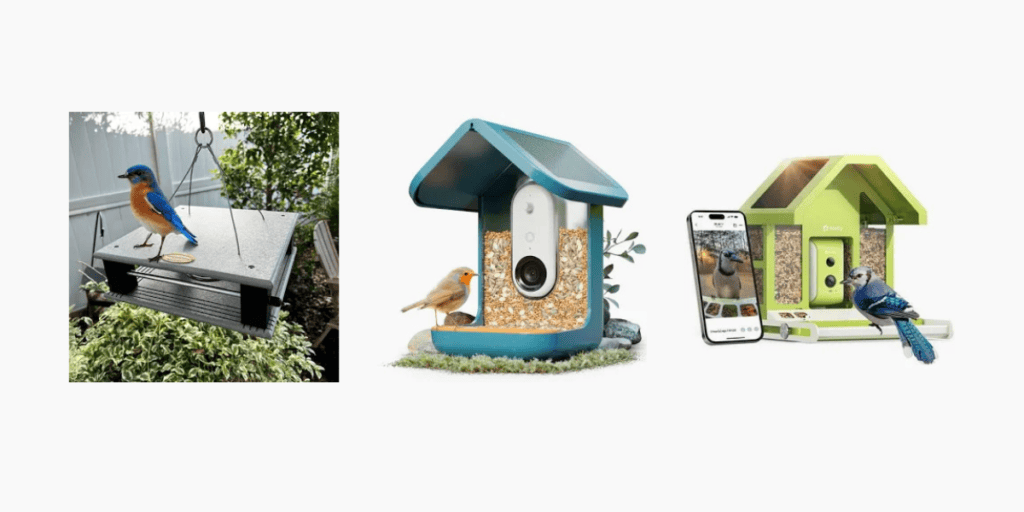
- Netvue Birdfy Feeder AI: Smart AI identification and live streaming.
- Nature’s Way Cedar Platform: Popular open design.
Best Squirrel-Proof Bird Feeders
- Brome Squirrel Buster Plus: Weight-activated perches.
- Droll Yankees Yankee Flipper: Motorized spinning perch.
- Squirrel Baffles: Essential accessories for pole or hanging mounts.
Attracting Specific Bird Species
- Hummingbirds: Use red saucer feeders and a 1:4 sugar-water solution.
- Cardinals: Prefer platform or hopper feeders with sunflower seeds.
- Finches: Require Nyjer seed and mesh or specialized thistle feeders.
- Woodpeckers: Attracted to suet feeders with tail props.
Key Factors When Choosing a Bird Feeder
Material: Glass vs. Plastic
- Glass: Durable, easier to clean, keeps nectar cooler.
- Plastic: Affordable and lightweight, but can warp or degrade over time.
- Pest Protection: Look for ant moats for hummingbirds and baffles for squirrels.
Best Bird Food and Nectar Guide
- Black Oil Sunflower Seeds: The #1 choice for most birds.
- Nyjer Seed: Best for finches.
- Hummingbird Nectar: 1 part white sugar to 4 parts water (No red dye).
- Suet: Vital high-energy fat for winter feeding.
Strategic Bird Feeder Placement
- Safety: Place 10-15 feet from cover to provide an escape from predators.
- Windows: Place within 3 feet or beyond 15 feet to prevent collisions.
- Hummingbirds: Hang in a shady spot near nectar-producing flowers.
Frequently Asked Questions (FAQ)
Which feeder attracts the most hummingbirds?
Saucer-style feeders like the Aspects HummZinger are highly effective due to ease of cleaning and clear viewing.
Is it better to have glass or plastic hummingbird feeders?
Glass is generally better as it is more durable, easier to sanitize, and doesn’t leach chemicals.
When should I put out a hummingbird feeder?
About two weeks before they are expected to migrate back to your area in spring.
Conclusion: Start Your Bird-Feeding Journey
Setting up the perfect bird feeder is a simple yet rewarding way to enhance your backyard. By matching the right feeder type with preferred seeds and ensuring safe placement, you can enjoy a consistent parade of vibrant birds year-round.
Remember to keep your feeders clean and protected from pests to ensure a healthy environment for your feathered guests. With these tips, your outdoor space will soon become the neighborhood’s favorite avian retreat!